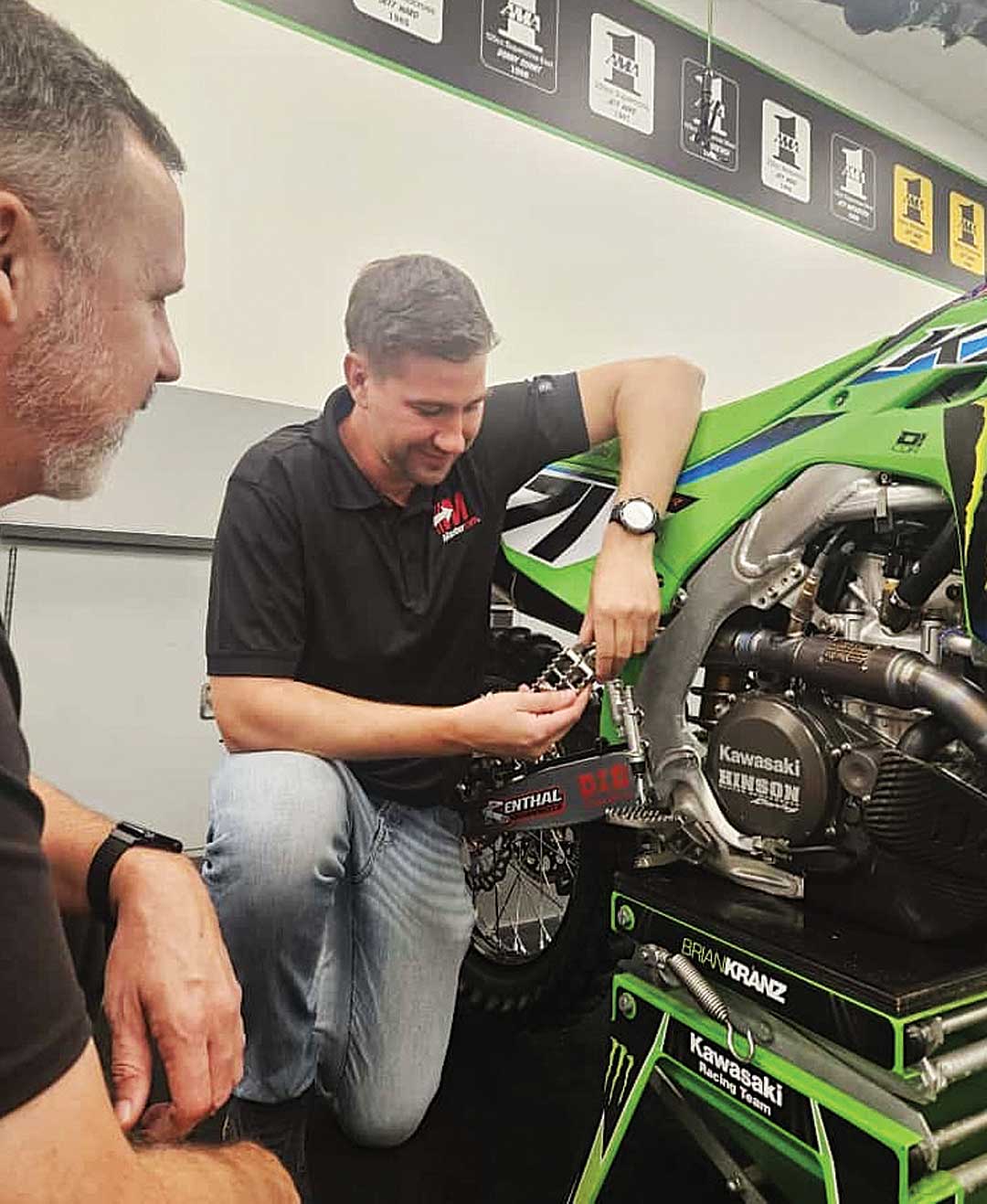
Jeremy Robinson from Kawasaki and Patrick Aiple from CCCS discuss customizing the foot pegs of Garrett Marchbank's competition bikes.
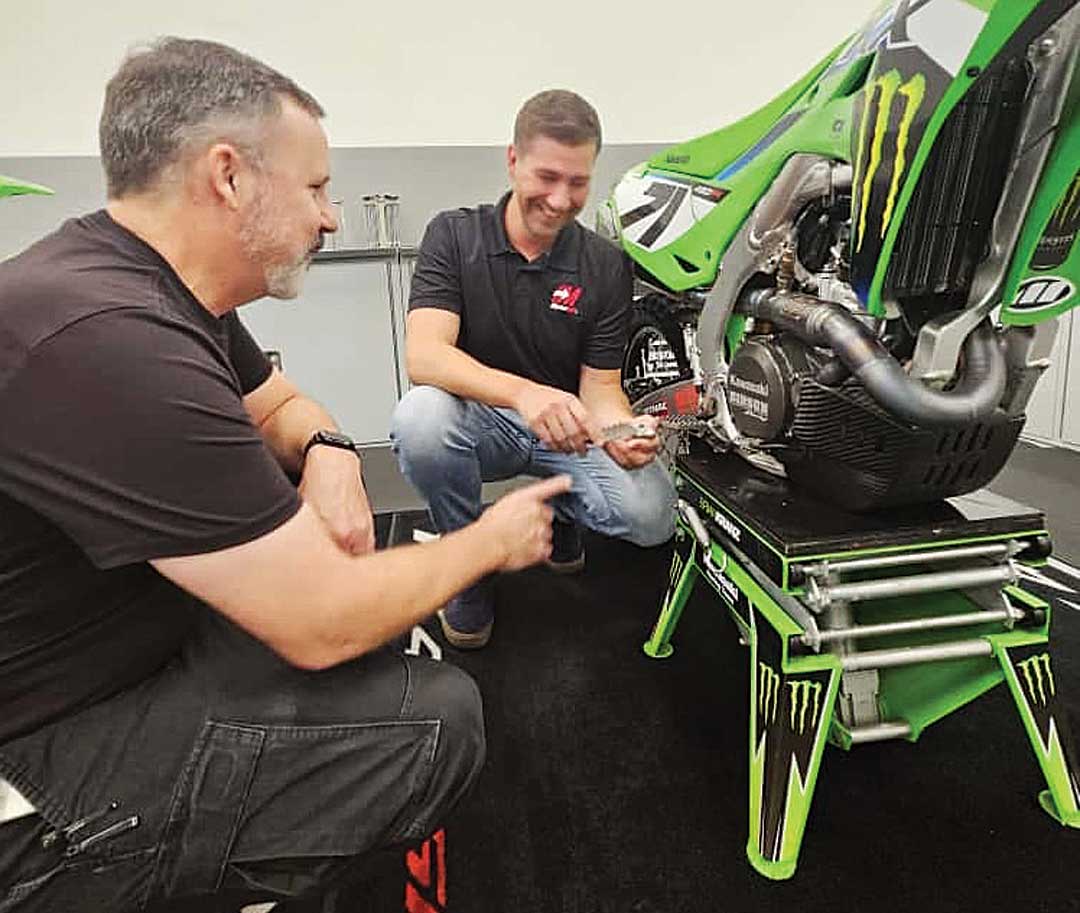
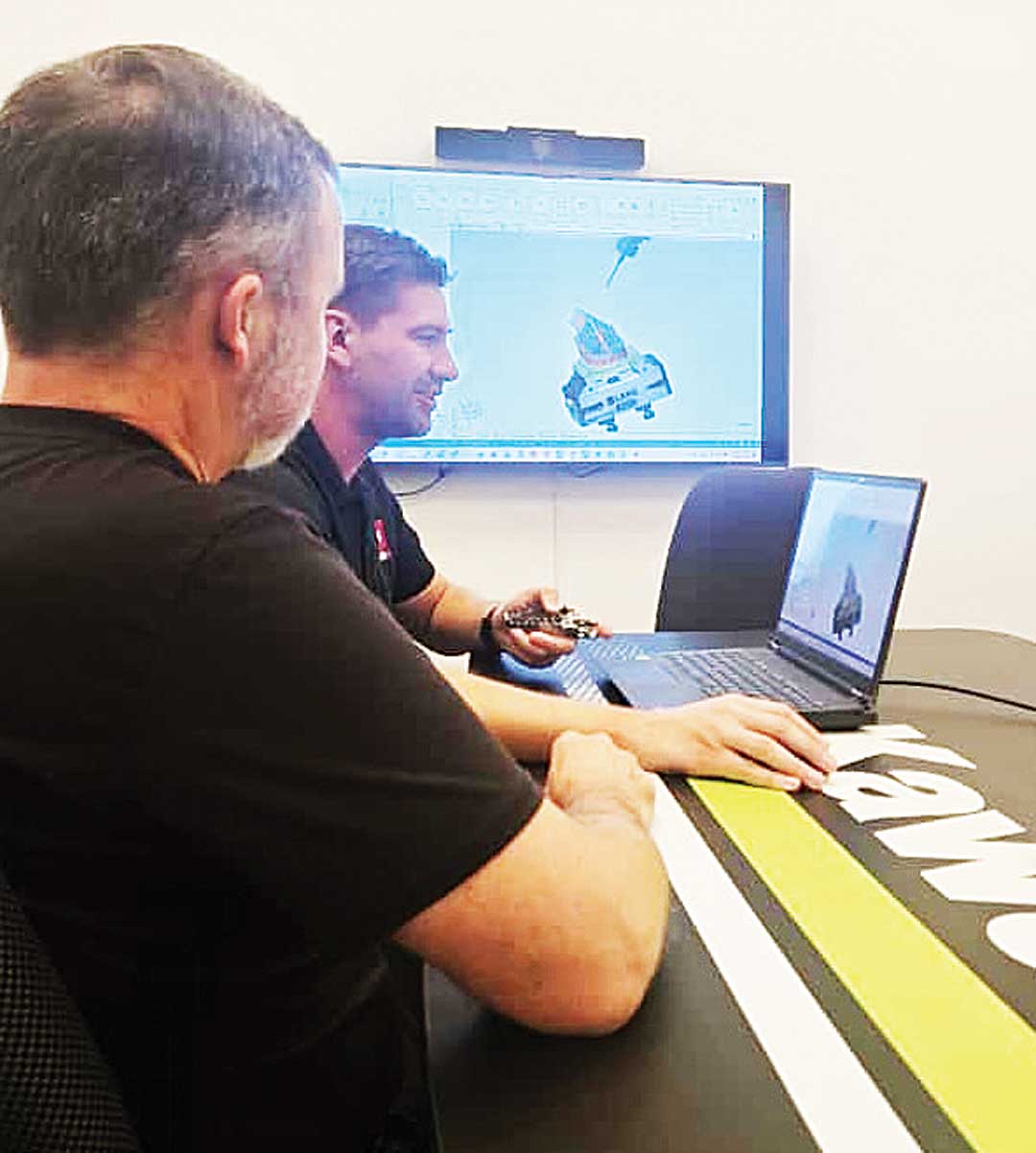
After looking over the bike and reviewing feedback from the racer, Robinson and Aiple program part changes and simulate toolpaths before machining
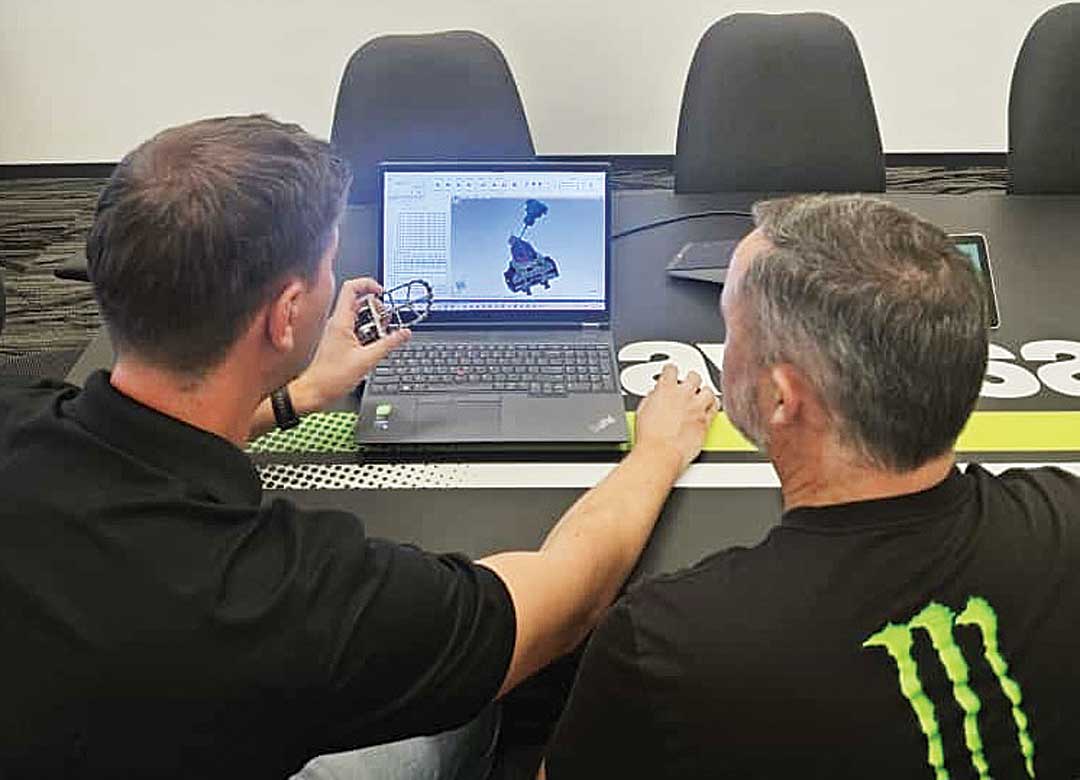
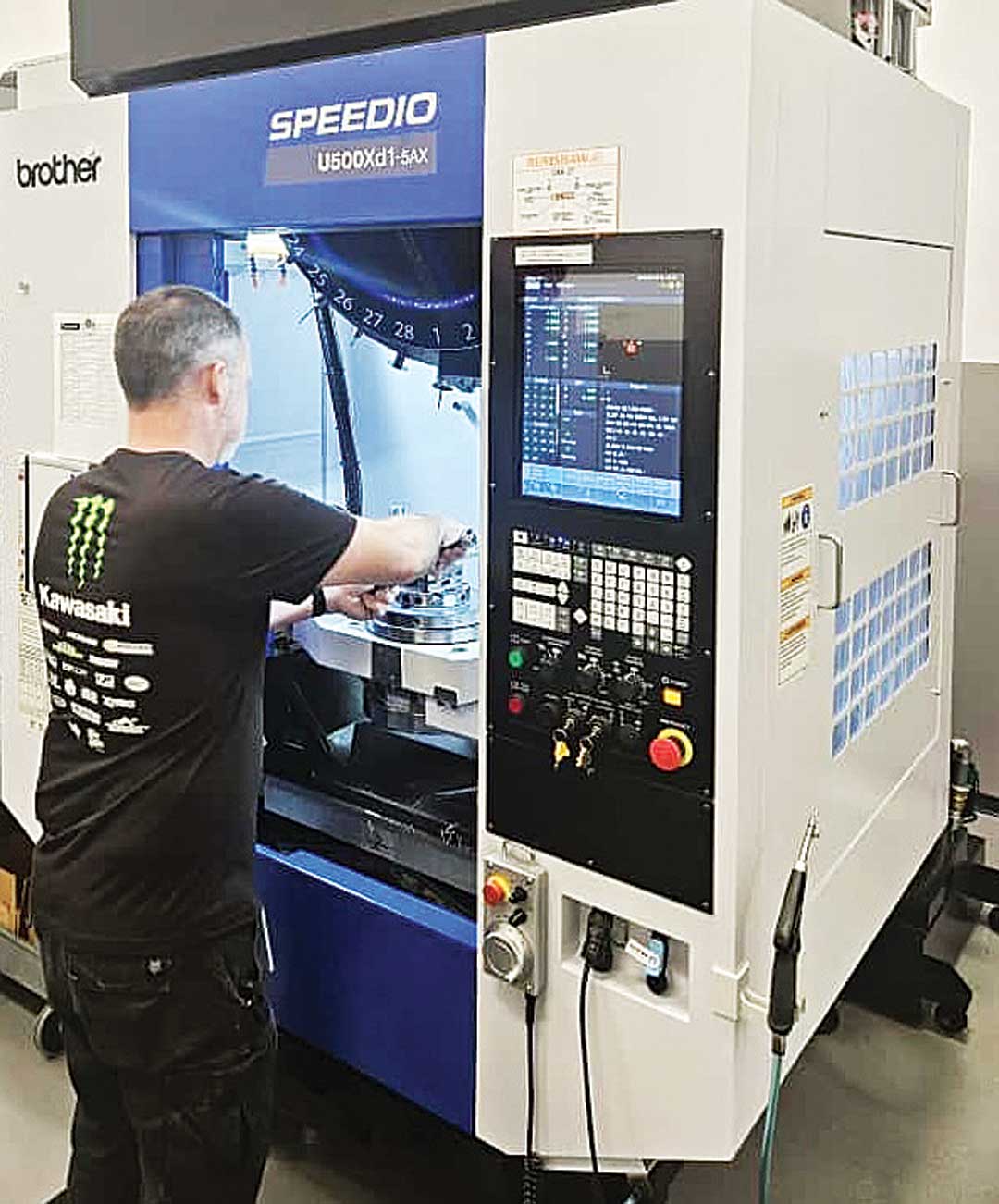
Once design and toolpaths are verified, Robinson runs a small batch of the updated foot pegs to try them on the test track.
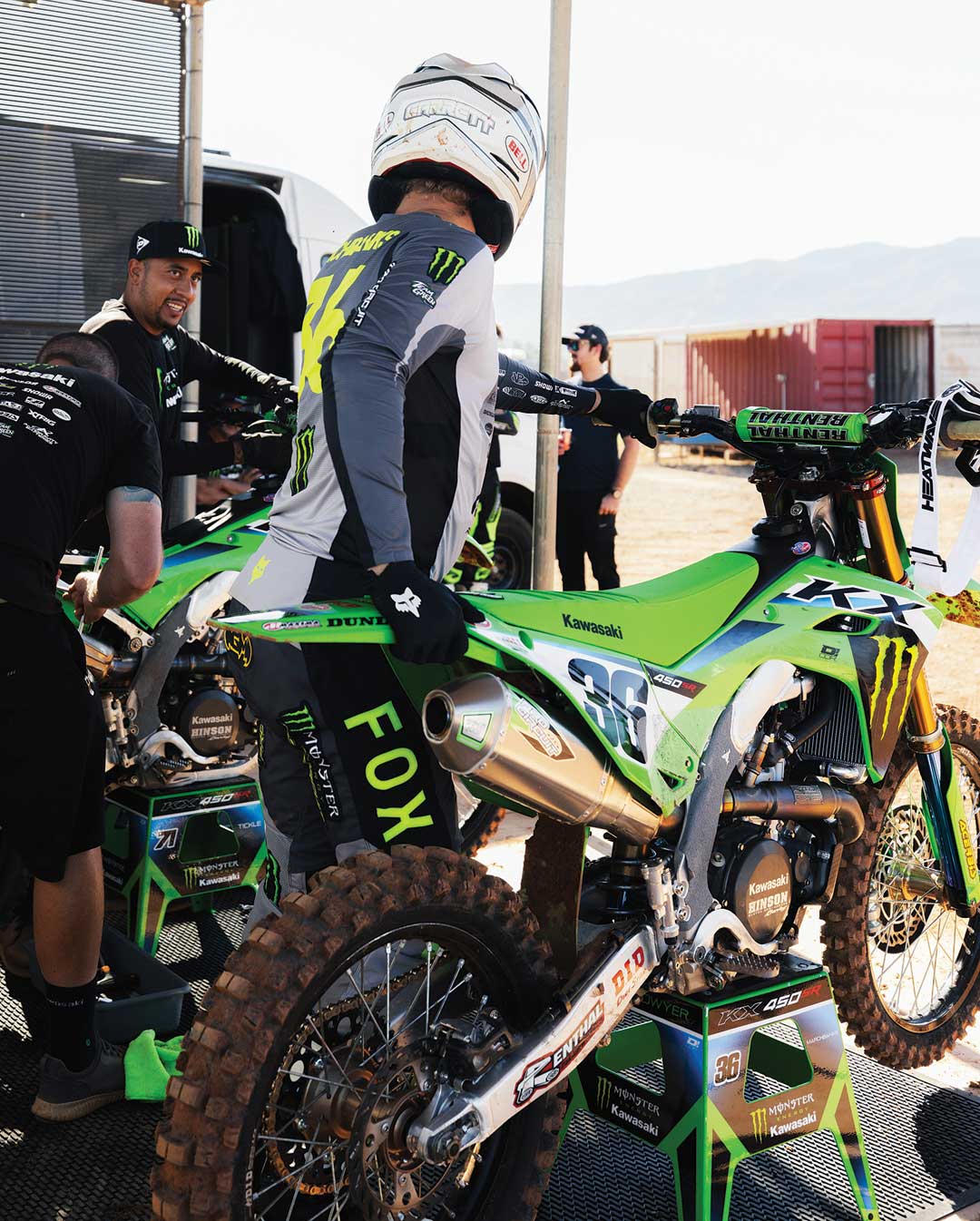
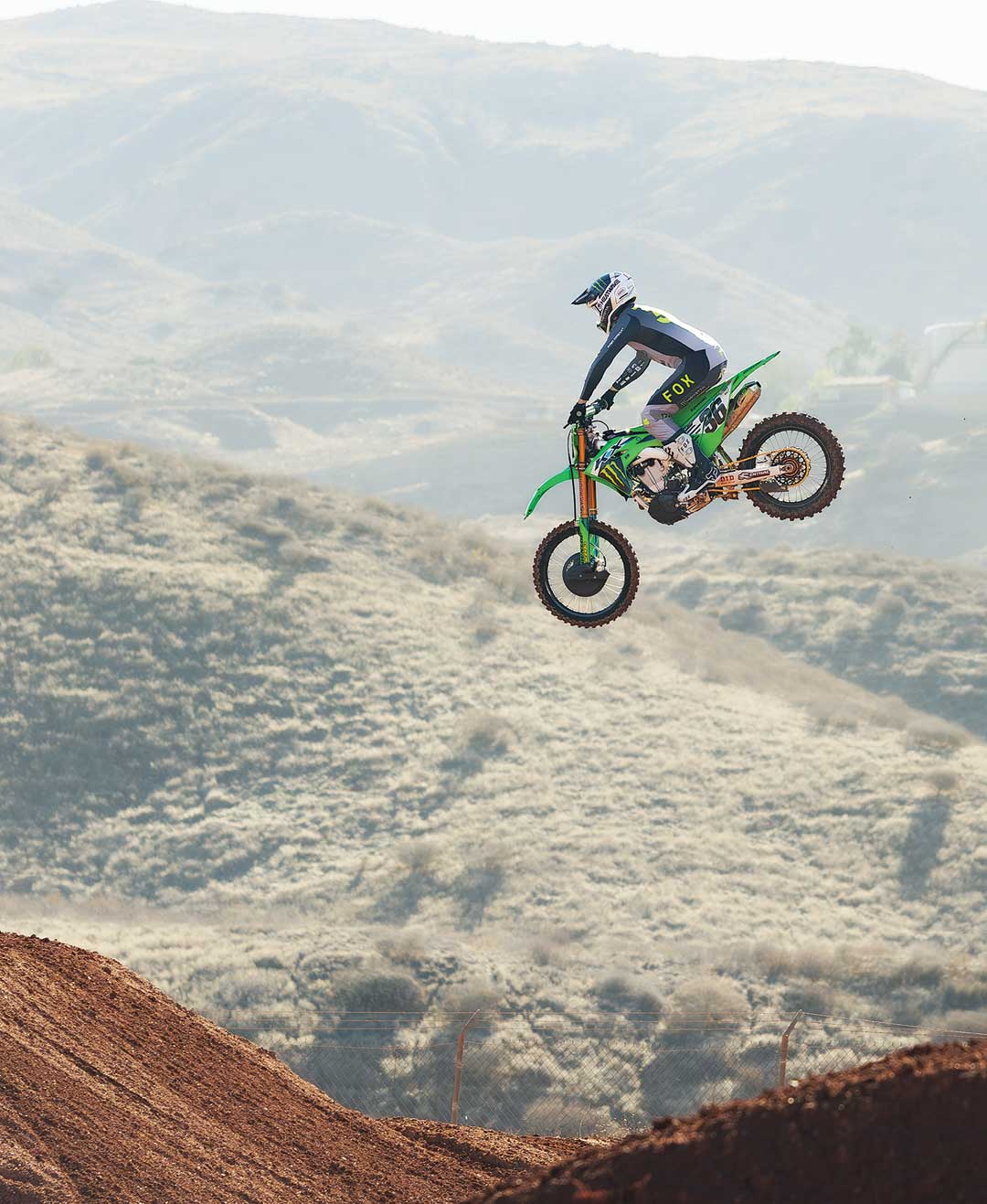
After updated parts are added to the bike, Garrett Marchbanks from the Monster Energy Kawasaki racing team takes the bike on a test run.
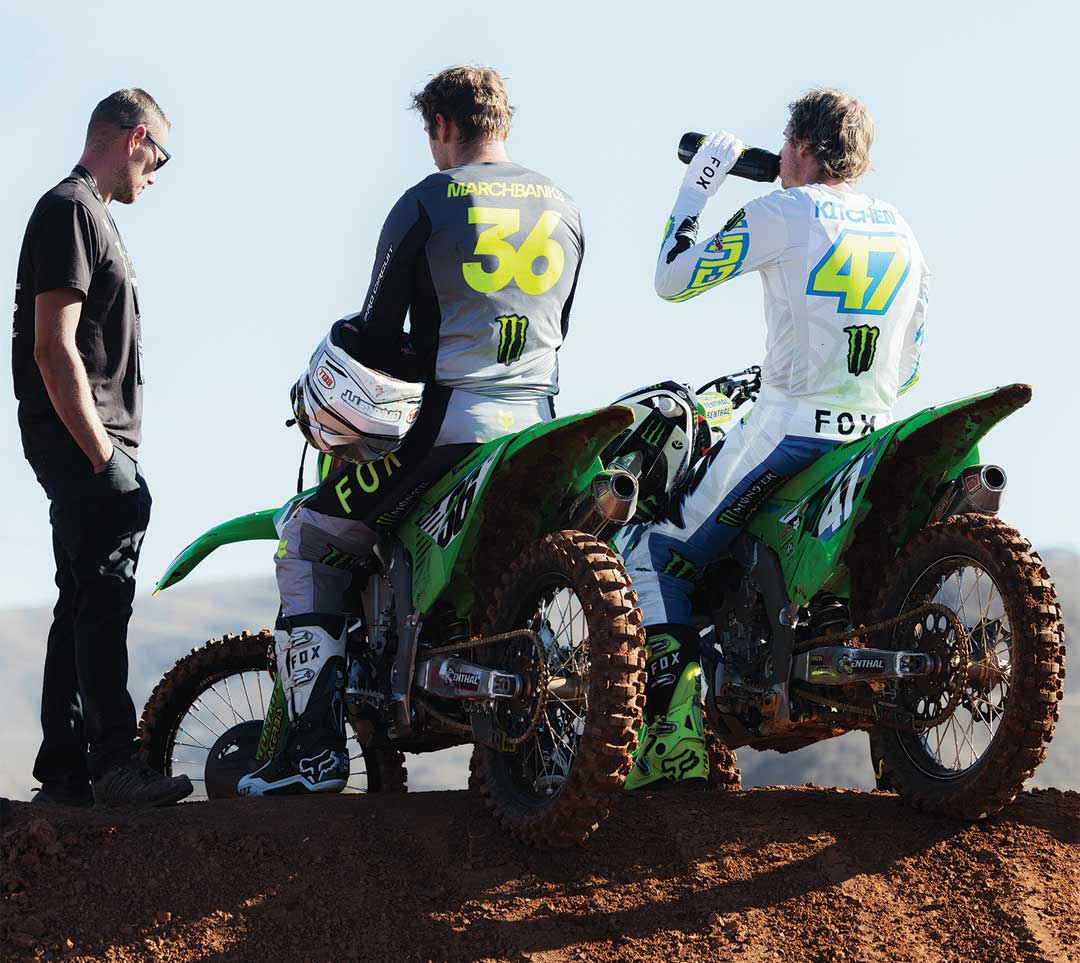
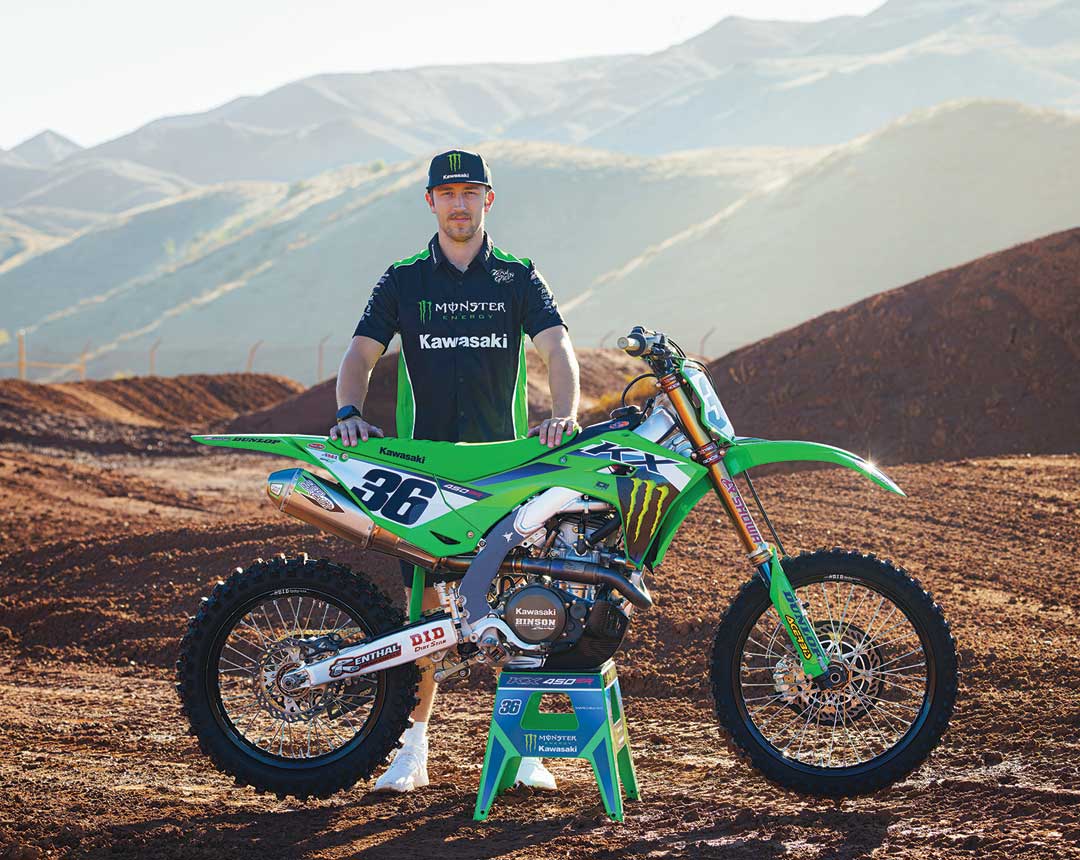
The racing team's efforts are paying off. Garrett Marchbanks, who competed in the 250MX class with Kawasaki last season, finished 3rd overall in the 2025 Pro Motocross Championship.
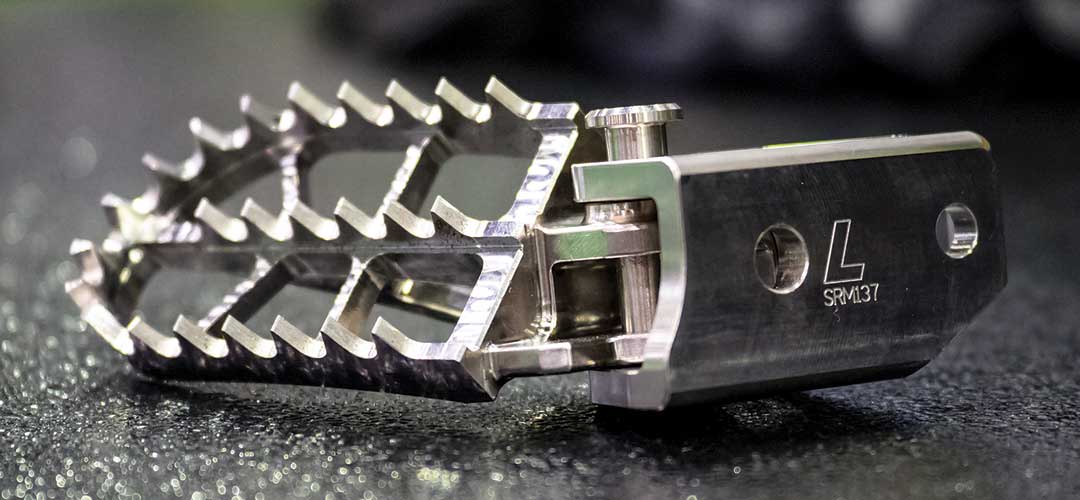
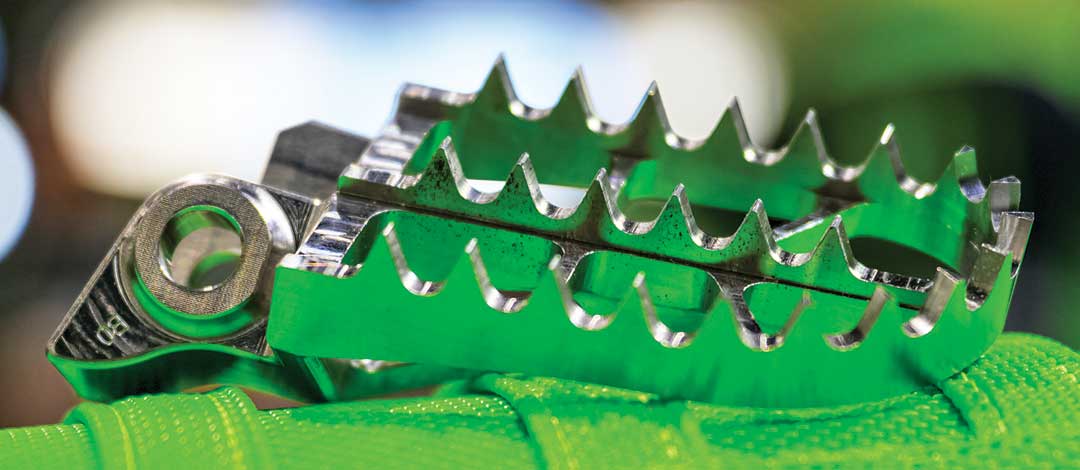
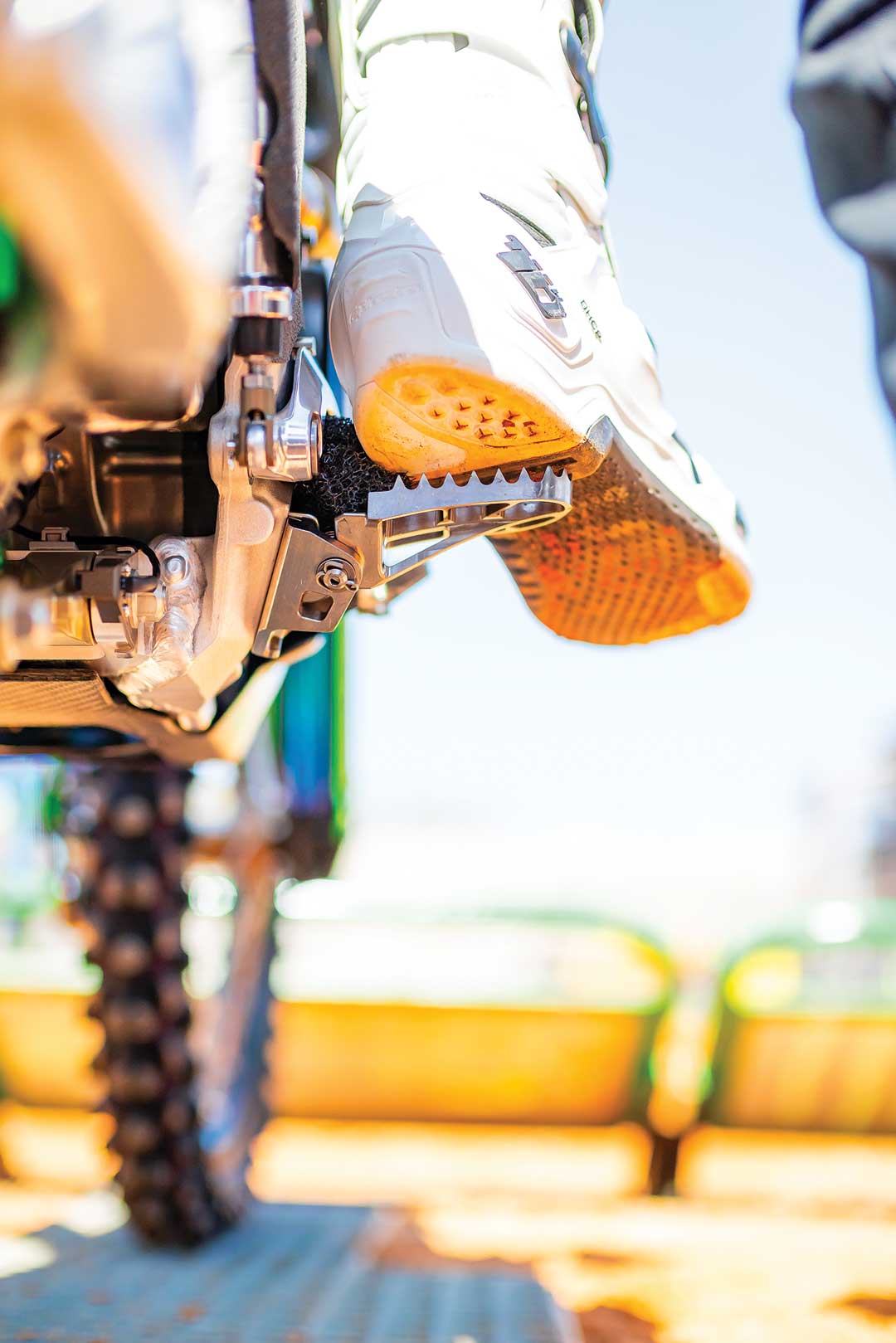
The footpegs and brackets were machined from titanium, which is expensive and difficult to machine. The Kawasaki team had recently added a tilting rotary table to its 3-axis mill; this would be the first time machining in a 3:2 set-up.
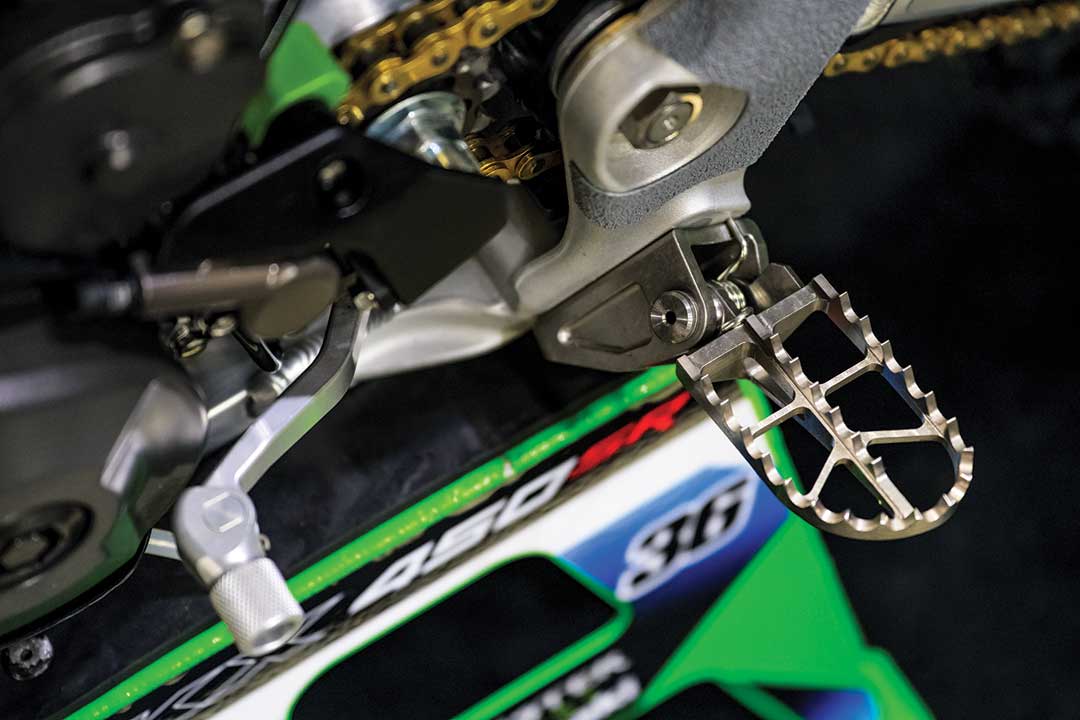
Garrett Marchbanks on his Kawasaki KX450SR during the Birmingham SX Supercross race in March 2026.
The Monster Energy Kawasaki race team, competing in the AMA Supercross, Pro Motocross, and Supermotocross championships, has a brutal schedule. There are 31 races starting in January and finishing at the end of September with races nearly every Saturday. The team heads back to the shop on Monday morning to go over what went on over the weekend, and the process starts all over again.
For Jeremy Robinson, Kawasaki's Supervisor of Racing Technology and Development, Monday through Thursday are whirlwind days spent collaborating with the race team to make adjustments to existing parts, engineer and machine prototypes of new parts, as well as replenish parts used in the last race. Both new and restocked parts need to be ready to go by the time the team travels to the next event.
The hectic, "in the moment" nature of visualizing, prototyping, and testing parts in the span of a day or two makes outsourcing part production both time and cost prohibitive, so the decision to purchase machines so they could produce their own parts was an easy one. Their shop, said Robinson, consists of two CNC mills-a 3-axis and a 5-axis-a CNC lathe, fabrication equipment, and deburring/finishing equipment.
Much of the time, the shop produces custom footpegs, suspension linkage, or shift levers to get the rider's fit on the bike just right. Other times there are brackets, mounts, spacers, or custom fasteners being made to fit the data acquisition system or make the mechanic's job easier.
Robinson starts with a concept that is discussed with the team and uses CAD/CAM software to create a solid model of the part, program the toolpaths, and generate the machine code to run on the machines. Often, the part is 3D printed in-house to verify the design before machining. If the team thinks he is on the right track, he produces a small batch for the racers to test the next day. The group has only Wednesday and Thursday to test prototypes and produce enough parts to supply the team for Saturday's race.
"I am a designer with good machining skills," said Robinson. "So, much of the time, I can program the toolpaths and machine the part myself."
Occasionally, though, Robinson and his team seek extra guidance as they design and machine parts. For that, they turn to the support team at their software reseller, CAD/CAM Consulting Services (CCCS), Newbury Park, CA. The company is a reseller for Mastercam CAD/CAM software and Vericut simulation software, Desktop Metal, and Roboze 3D printing solutions, and Verisurf inspection software, servicing engineering and manufacturing companies in southern California and surrounding regions.
Full-service training and support packages are available for the products they provide. Technical Support Manager John Pratt calls their support services "responsive and complete," meaning they do not consider the ticket closed until the customer is satisfied. Assistance can vary from a phone call to an onsite visit. In every case, the entire production process is considered.
"We could limit support to only the products we sell," said Pratt. "But the support team's background is in machining. We are master users of the products we sell, but with the lens of how they fit into the production process."
For Kawasaki, that lens has proved invaluable as they have added new machines and processes to keep their racers at the top of the leader board.
"When we purchased our software licenses, we purchased both training and support services," said Robinson. "I use the training to stay up to speed with new software releases, and I use support to get advice when I am diving into new machining strategies."
"Kawasaki rarely needs help on the software side," said Applications Engineer Patrick Aiple. "Usually, they need advice on the machining side-on getting the machine to run the part as they programmed, or because they are machining an unfamiliar material." This is exactly the situation Robinson found himself in just a couple of years ago.
"We decided to cut a set of footpegs and brackets in titanium, which is a metal I did not have a lot of experience with, and it is expensive," said Robinson. "The situation was also tricky because we had just added a tilting rotary table to our 3-axis mill, and I had never machined in a 3:2 set-up."
Robinson called CCCS support to get help with making toolpaths with the new material and new rotary table in mind, unsure of how to start programming, and not wanting to make too many test cuts with such an expensive material.
The CCCS team's collaborative approach is a good fit with the Moster Energy Kawasaki racing team, making it easy for Robinson to include their assistance into the racing team's tight schedule.
Robinson and Aiple worked on toolpath strategies that take advantage of the additional axis of a rotary table, as well as adjustments with tooling requirements and speeds and feeds.
Aiple's experience as a machinist is important to Kawasaki, as well as all of CCCS' customers. He feels that his experience helps give customers a total solution. He also enjoys learning from the customers he helps, citing each new situation as an opportunity to learn something new.
Did he learn anything in particular from the Monster Energy Kawasaki racing team?
"I race motocross bikes on the weekend," said Aiple "So sometimes I trade machining tactics for racing tactics."
For more information contact:
CAD/CAM Consulting Services
810 Lawrence Drive, Ste. 220
Newbury Park, CA 91320
805-514-1491
www.cad-cam.com/contact